The landscape
Neurodegenerative diseases is an emerging group of diseases affecting millions of people today (55 million) and this number is forecasted to reach 139 million by 2050.
Our group at the University of Limerick works on the aitiology of NDs and which biochemical pathways are involved in the development of NDs and how we can offset these.
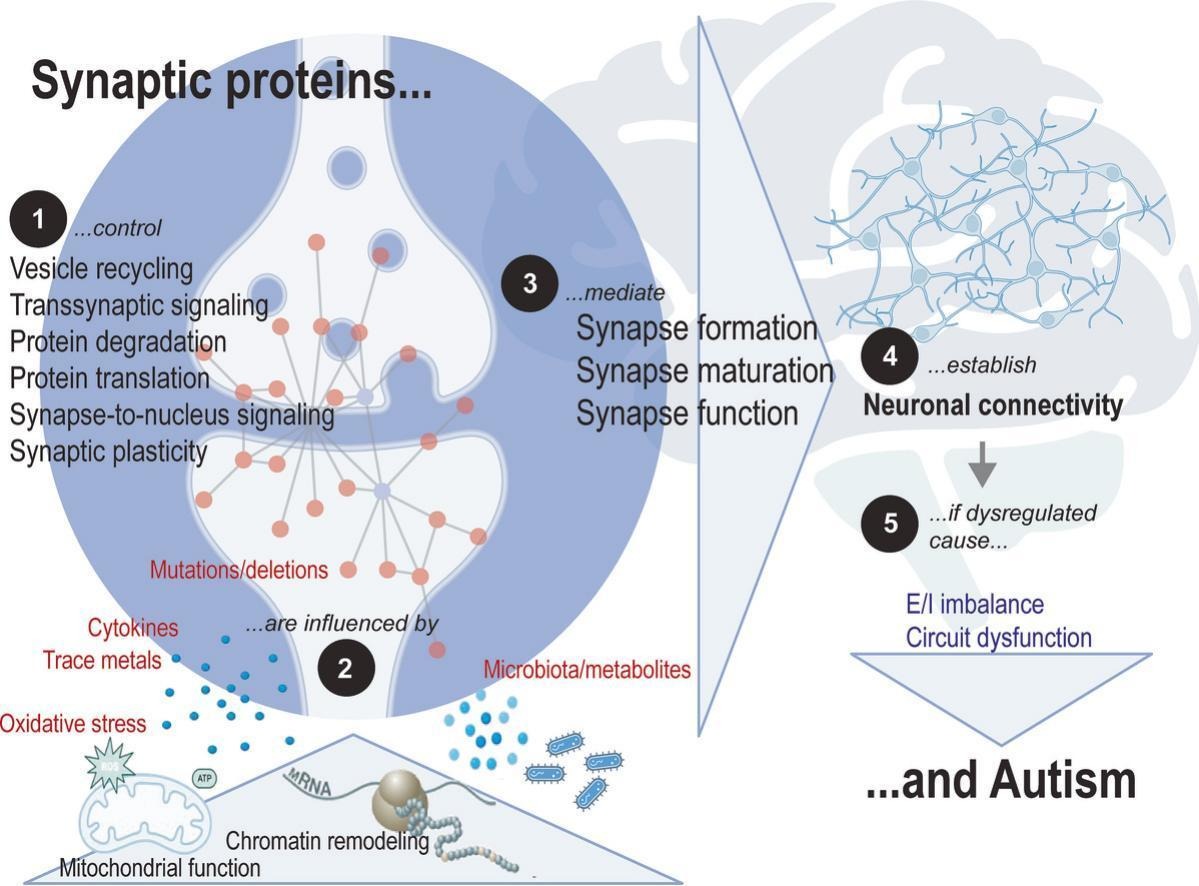
Our latest publication focuses on autism: Synaptic protein mutations in autism
The key role of synapsis
Multiple membrane proteins, enzymes, ion channels, and a dynamic web of cytoskeletal proteins are connected by scaffolding proteins at synapses. However, scaffolded signaling complexes may act as functionally distinct modules since their characteristics are not just additive to those of the individual components. The precise connections between protein complexes are linked to the activation of various signaling pathways regulating scaffold protein expression and localization.
Moving forwards
Innovative medicines and prevention strategies might be created that target the synaptic proteome by modifying or preventing external factors acting during brain development. So far, mostly a single “ome” (Metabolome, Metallome, Lipidome, Epigenome) is analyzed and utilized to forecast potential pathomechanisms in the great majority of ASD-related investigations using “omics” techniques. However, linking these “omes” to the synaptic proteome in multi-omics studies is necessary to understand how a considerable heterogeneity of ASD-linked factors causes the core behavioral features seen in ASD, and to develop biomarker-guided stratification strategies to identify biologically defined subgroups within the autism spectrum.